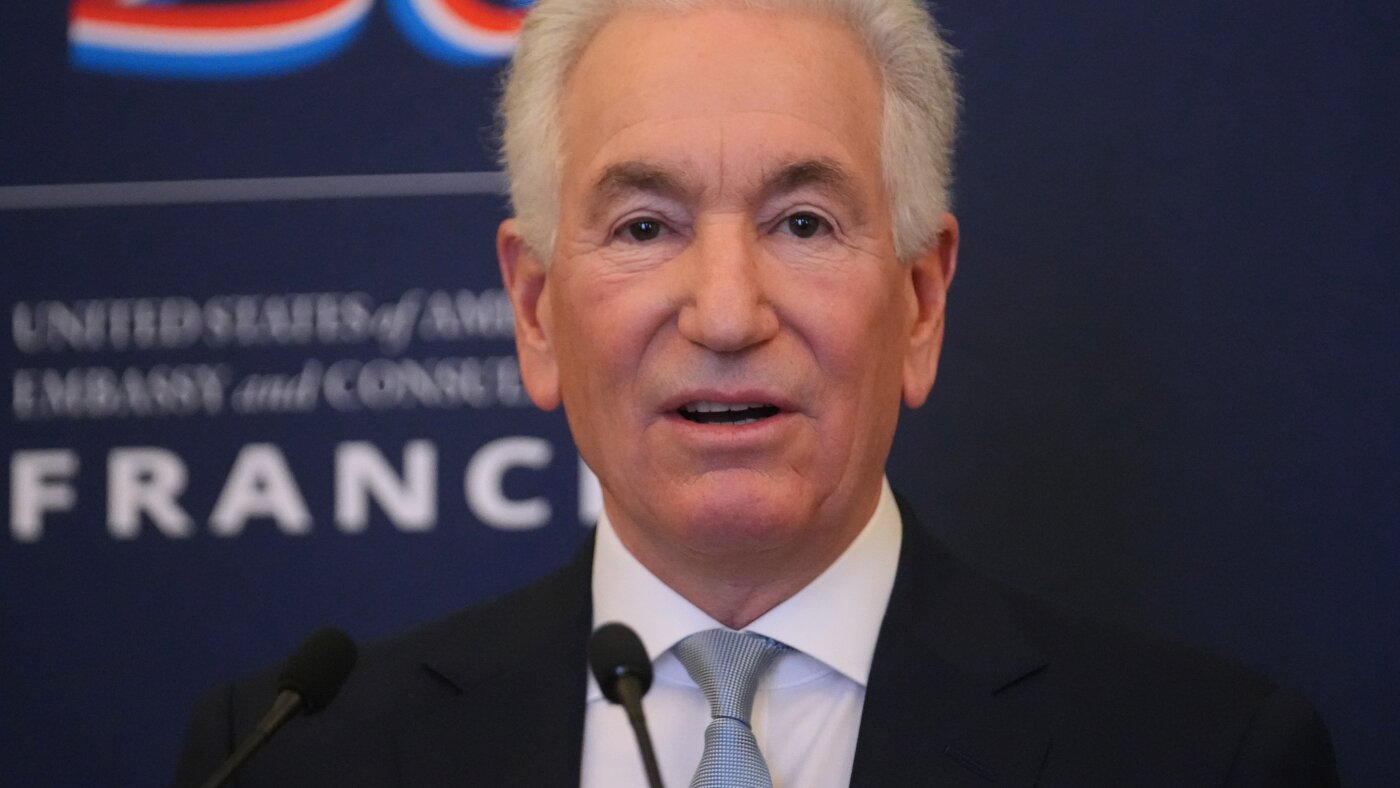
The diplomatic world is abuzz, and at its center is U.S. Ambassador to France, Charles Kushner. In a rare and significant move, French Foreign Minister Jean-Noël Barrot has formally summoned Ambassador Kushner, warning that his ability to "exercise his mission" in the country is on the line. This isn't the first time the ambassador has found himself in France's diplomatic crosshairs, but the current incident highlights a growing tension over perceived foreign interference in domestic affairs, exacerbated by the volatile landscape of social media diplomacy.
A Diplomatic Firestorm: The Deranque Controversy
The immediate catalyst for this high-stakes diplomatic confrontation stems from a tragic incident in Lyon and subsequent comments from U.S. government bureaus. Earlier this month, far-right activist Quentin Deranque died after sustaining severe brain injuries during a reported clash between far-right and far-left groups. His death ignited a fresh wave of political tension in France, a country already grappling with a polarized political environment.
The Tragic Incident and US Reaction
In the wake of Deranque's death, the U.S. State Department’s Counter Terrorism Bureau issued a statement via social media that sent shockwaves through the French diplomatic community. The post declared, "Violent radical leftism is on the rise and its role in Quentin Deranque’s death demonstrates the threat it poses to public safety. We will continue to monitor the situation and expect to see the perpetrators of violence brought to justice." This statement, amplified by a repost from the U.S. Embassy in Paris, was interpreted by France as an unwarranted and politically charged intervention into a sensitive domestic matter.
For context, official U.S. government bodies typically exercise extreme caution when commenting on internal political violence or social unrest in allied nations. The direct attribution of blame and the broad generalization about "violent radical leftism" crossed a line for French authorities, who view such pronouncements as a breach of diplomatic etiquette and an affront to national sovereignty.
France's Vehement Rejection and Diplomatic Consequences
French Foreign Minister Jean-Noël Barrot wasted no time in delivering a strong rebuke. "We reject any instrumentalization of this tragedy, which has plunged a French family into mourning, for political ends," Barrot stated, underscoring France's deep resentment at the perceived exploitation of a national tragedy. He further asserted, "We have no lessons to learn, particularly on the issue of violence, from the international reactionary movement." This powerful declaration not only dismissed the U.S. comments but also hinted at a broader disdain for what France views as an external, ideologically driven narrative.
The summons itself is a significant diplomatic action. Barrot warned Kushner that if he fails to respond and provide satisfactory explanations, he would be unable to "regain access to members of the French government" and effectively "exercise his mission" in the country. This isn't merely a request for a chat; it's a formal and public expression of severe disapproval, with tangible consequences for the ambassador's functional capacity. French authorities have officially moved to restrict Kushner's access to government officials, a clear signal of the diplomatic freeze in effect. For more on the specifics of the summons and its immediate aftermath, readers can refer to US Ambassador Charles Kushner Summoned by France Over Social Media Controversy.
Beyond the Tweet: Why This Summoning Matters
A diplomatic summons is never a casual affair. It represents a serious escalation, signaling that the host nation perceives a significant breach of protocol or an unacceptable action by a foreign diplomat or their government. In this case, the French government is making it clear that the U.S. Ambassador, France Restricts Charles Kushner's Access Amid Diplomatic Row in a manner that gravely impacts bilateral relations.
The Weight of a Diplomatic Summons
When an ambassador is summoned, it's typically for a grave matter requiring urgent clarification or protest. It implies that ordinary diplomatic channels have been insufficient or that the offense is too serious to be handled through routine communications. For Charles Kushner, this means his standing as the representative of the United States in France is critically undermined until the French government is satisfied with the explanations provided. The restriction on his access to French officials effectively hobbles his ability to perform his duties, hindering crucial communications and negotiations between two historically allied nations.
From a diplomatic perspective, an ambassador's mission is to foster good relations, represent their country's interests, and facilitate dialogue. When that mission is explicitly challenged or curtailed, it reflects a deep fissure in the relationship. While France has left the door open for reconciliation, emphasizing the 250-year friendship between the nations, the ball is firmly in Ambassador Kushner's court to mend the perceived "irritants."
Social Media in Modern Diplomacy: A Double-Edged Sword
The incident also shines a harsh light on the evolving, and often perilous, role of social media in modern diplomacy. Official government accounts, even those of specialized bureaus, often carry the weight of state policy. A tweet, once considered a casual update, can now be interpreted as an official declaration, with immediate and far-reaching consequences.
- Lack of Nuance: Social media posts often lack the nuance and context traditionally afforded by formal diplomatic communications, making them prone to misinterpretation or offense.
- Speed of Dissemination: Information, or misinformation, spreads instantly, leaving little time for traditional diplomatic channels to mitigate damage.
- Perception of Interference: When a foreign government comments on sensitive domestic issues via social media, it can easily be perceived as meddling, regardless of intent.
For diplomats and government agencies, the lesson is clear: every post, every share, every like from an official account carries immense weight. It demands the same level of scrutiny and strategic thinking as a formal diplomatic cable or public statement. The quick click of a button can unravel months or years of careful relationship-building, as the current situation with Charles Kushner in France vividly demonstrates.
A Pattern of Strain: Kushner's Previous Diplomatic Hurdles
This isn't the first time Charles Kushner has faced French diplomatic ire. His tenure has been marked by instances that suggest a challenging adaptation to traditional diplomatic norms and sensitivities. These previous incidents contribute to the French perception of a pattern of disregard for protocol.
The Antisemitism Allegations of Last Year
Just last year, France summoned Kushner after he controversially accused the French government of "fuelling antisemitism" through its criticisms of Israel. The U.S. State Department had backed these allegations, further exacerbating the tension. The French Foreign Ministry vehemently refuted the claims, viewing them as a baseless and provocative attack. Adding to the diplomatic friction, Kushner reportedly did not report to the ministry himself, sending the U.S. embassy’s charge d’affaires in his place – an act widely seen as a diplomatic snub and an indication of disrespect for the host nation's authority.
This earlier episode set a precedent, suggesting a willingness by Ambassador Kushner to engage in direct, often confrontational, commentary on French domestic and foreign policy, rather than adhering to more subtle diplomatic engagement. It also underscored a potential divergence in U.S. and French perspectives on sensitive geopolitical issues, particularly concerning the Middle East.
The 'Controversial Pick': Charles Kushner's Background
Kushner's appointment as Ambassador to France by then-President Donald Trump following his 2024 presidential election victory was itself a point of contention. As the father of Trump’s son-in-law, Jared Kushner, his nomination was widely seen as a political reward rather than a recognition of extensive diplomatic experience. Adding to the controversy was his past: Kushner had been convicted in 2005 for tax evasion, illegal campaign contributions, and witness tampering, serving a prison sentence before being pardoned by Trump in 2020.
This background undoubtedly shapes how the French government and public perceive Charles Kushner. It raises questions about his understanding of international law, ethical conduct, and the delicate art of diplomacy. While ambassadors are political appointees, a controversial personal history can influence their effectiveness and the respect they command from their host nation. The perception of a diplomat who operates outside traditional norms, perhaps emboldened by high-level political backing, can lead to increased scrutiny and decreased patience from the receiving state, directly impacting the dynamic between Charles Kushner and France.
Navigating the Path Forward: Implications for US-France Relations
The current standoff between Charles Kushner and France represents a significant test for the enduring, if sometimes turbulent, alliance between the United States and France. While the immediate issue is a specific diplomatic gaffe, the underlying tensions touch upon sovereignty, respect, and the conduct of international relations in an increasingly digital and polarized world.
Restoring Trust and Access
The path to reconciliation hinges on Ambassador Kushner's response to the summons. French Foreign Minister Barrot has been clear: "When these explanations have taken place, then the U.S. ambassador in France will, naturally, regain access to members of the French government." This suggests that a direct, earnest, and potentially apologetic explanation is required. It's an opportunity for Kushner to demonstrate an understanding of French sensitivities and a commitment to respecting diplomatic norms. Failure to do so could lead to a sustained diplomatic freeze, severely impeding the ambassador's ability to represent U.S. interests effectively.
For the U.S. State Department, this incident offers a crucial reminder about the importance of consistency and coordination in official communications, particularly those published on social media platforms. Ensuring that all official statements, regardless of the bureau, align with broader diplomatic strategy and respect allied nations' sovereignty is paramount.
The Broader Geopolitical Context
The historical friendship between the U.S. and France spans over two centuries, marked by periods of close cooperation and occasional friction. This latest incident, however, occurs in a broader geopolitical landscape where global alliances are being re-evaluated and internal political divisions within nations are increasingly exploited. Should Donald Trump return to the U.S. presidency, the approach to diplomacy and the style of appointees like Charles Kushner could become even more pronounced, potentially leading to further strains in traditional alliances.
Ultimately, the resolution of this diplomatic spat will depend on both sides' willingness to engage respectfully. For Charles Kushner and France, this moment calls for a renewed commitment to the principles of diplomacy, mutual respect, and the understanding that even the strongest friendships require careful nurturing.
The summoning of Charles Kushner by France serves as a potent reminder of the fragility of diplomatic relations and the profound impact of words, especially when delivered from positions of power. It underscores the critical need for ambassadors to navigate their roles with the utmost sensitivity, understanding, and adherence to protocol, particularly in an era where digital communication can instantly ignite international controversies. The ongoing saga between Ambassador Charles Kushner and France will be a key indicator of how traditional diplomatic norms adapt to contemporary challenges and whether the foundational respect between allies can weather these new storms.