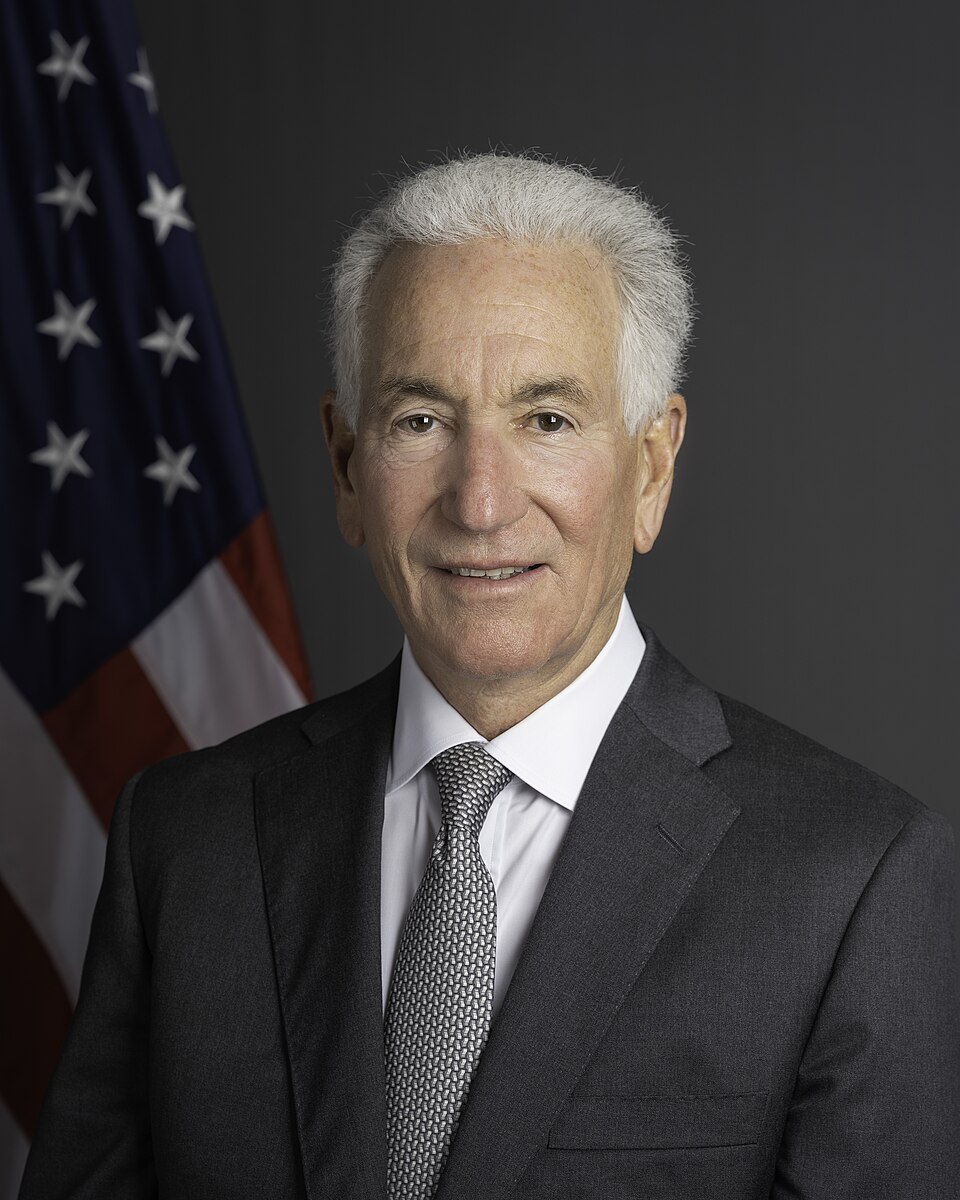
US Ambassador Charles Kushner Summoned by France Over Social Media Controversy
A significant diplomatic incident has unfolded between the United States and France, centering on U.S. Ambassador Charles Kushner. French Foreign Minister Jean-Noël Barrot has taken the rare step of summoning Ambassador Kushner to the Foreign Ministry, issuing a stern warning that his ability to "exercise his mission" in France could be jeopardized if he fails to respond adequately. This high-stakes summons underscores escalating tensions between two long-standing allies, triggered by controversial social media posts from the U.S. State Department and the U.S. Embassy in Paris. The core of the dispute revolves around comments regarding the death of a far-right activist, raising profound questions about diplomatic protocol, national sovereignty, and the role of social media in international relations. The relationship between
charles kushner france is once again under intense scrutiny, highlighting the delicate balance required in high-level diplomacy.
The Genesis of a Diplomatic Row: Social Media and Tragic Events
The immediate catalyst for the diplomatic imbroglio was a series of social media posts, specifically from the U.S. State Department's Counterterrorism Bureau and subsequently shared by the U.S. Embassy in Paris. These posts addressed the tragic death of Quentin Deranque, a far-right activist who died earlier this month after sustaining brain injuries during a reported clash between far-right and far-left groups in Lyon, France.
The U.S. statements were explicit in their condemnation: "Violent radical leftism is on the rise and its role in Quentin Deranque’s death demonstrates the threat it poses to public safety. We will continue to monitor the situation and expect to see the perpetrators of violence brought to justice," one statement read. Another from the State Department's Counterterrorism Bureau claimed that "reports, corroborated by the French Minister of the Interior, that Quentin Deranque was killed by left-wing militants, should concern us all."
From the French perspective, these statements represented a profound and unacceptable intrusion into their internal affairs. While the death of Quentin Deranque is undeniably a grave matter, and judicial investigations are underway, the direct attribution of blame by a foreign government, particularly through public social media channels, is seen as a breach of diplomatic etiquette. Such declarations can be perceived as prejudging ongoing investigations and injecting external political commentary into a sensitive domestic issue, potentially inflaming an already tense national political climate.
France's Swift and Strong Rebuke
French Foreign Minister Jean-Noël Barrot's response was swift and unequivocally firm. He rejected the U.S. statements in the strongest terms, declaring, "We reject any instrumentalization of this tragedy, which has plunged a French family into mourning, for political ends." Barrot further emphasized France's autonomy and dignity, stating, "We have no lessons to learn, particularly on the issue of violence, from the international reactionary movement."
The summoning of an ambassador is a serious diplomatic move, signaling profound dissatisfaction. When explanations are demanded, as Barrot articulated, they are not merely procedural; they are essential for maintaining diplomatic access and functionality. His warning that Ambassador Kushner would not be able to "exercise his mission" or "regain access to members of the French government" until these explanations are made is a significant restriction. It effectively means that until the diplomatic irritant is smoothed over, Kushner's ability to engage with French officials at ministerial levels will be curtailed, hindering his effectiveness as an ambassador. This situation is more than a simple misunderstanding; it touches upon the fundamental expectations of diplomatic conduct. For a deeper understanding of the ongoing challenges, see
Charles Kushner's Diplomatic Troubles: Why France is Summoning the US Ambassador.
The principle here is clear: an ambassador's role is to represent their country's interests while respecting the sovereignty and internal affairs of the host nation. Publicly assigning blame or making definitive statements on ongoing domestic legal matters crosses a line, regardless of the perceived intent. Diplomats, especially those representing nations with long-standing alliances, are expected to communicate concerns through established, private channels, thereby upholding mutual respect and avoiding public friction.
A Pattern of Strain: Previous Encounters and Kushner's Controversial Appointment
This is not the first instance of friction between Ambassador Charles Kushner and the French government. Just last year, France summoned Kushner after he publicly accused the French government of fueling antisemitism through its criticisms of Israel. At the time, France's Foreign Ministry strongly refuted these allegations, which were echoed by the U.S. State Department. Notably, Kushner reportedly did not attend that meeting, instead sending the U.S. embassy’s charge d’affaires in his place. Such an action, if true, could be interpreted as a further slight, demonstrating a lack of direct engagement with French diplomatic concerns.
Ambassador Kushner's appointment itself has been a subject of controversy. The father of former President Donald Trump’s son-in-law, Jared Kushner, Charles Kushner was nominated by Trump to serve as ambassador to France following his presidential election victory. This nomination raised eyebrows for some, given Kushner’s previous federal conviction for tax evasion and witness tampering, among other charges. He was pardoned by President Trump in 2020. While a presidential pardon legally restores rights, such a background can sometimes present unique challenges in navigating the intricacies of international diplomacy, where impeccable reputation and adherence to legal norms are often paramount. The recurrence of diplomatic summons underscores a consistent pattern of tension in the relationship between
charles kushner france.
Navigating Diplomatic Tensions: Prospects for Resolution
Despite the severity of the French rebuke and the restrictions placed on Ambassador Kushner's access, the door for reconciliation remains open. The French Foreign Ministry's statement noted, "It remains, of course, possible for Ambassador Charles Kushner to carry out his duties and present himself at the Quai d’Orsay, so that we may hold the diplomatic discussions needed to smooth over the irritants that can inevitably arise in a friendship spanning 250 years." This indicates a willingness to resolve the issue through dialogue, affirming the enduring nature of the U.S.-France relationship despite periodic disagreements.
For resolution to occur, Ambassador Kushner will likely need to engage directly with the French Foreign Ministry, provide the requested explanations, and potentially offer assurances of future adherence to diplomatic norms. Diplomatic impasses between allies are typically resolved through:
- Direct Dialogue: Face-to-face meetings where concerns are aired and understood.
- Clarification of Intent: Explaining the context or perceived intent behind the controversial statements.
- Reaffirmation of Principles: Reassuring the host nation of respect for its sovereignty and non-interference in internal affairs.
- Commitment to Proper Channels: Agreeing to use established diplomatic channels for sensitive communications moving forward.
From a practical standpoint, diplomats are often advised to exercise extreme caution when commenting on domestic political or legal matters in their host countries, especially via public platforms like social media. Responsible social media engagement for ambassadors involves:
- Verifying Information: Ensuring all public statements are factually accurate and based on official, confirmed sources.
- Respecting Sovereignty: Avoiding comments that could be seen as interference in internal affairs or judgments on ongoing investigations.
- Prioritizing Private Channels: Using private, diplomatic communications for sensitive issues before considering public statements.
- Considering Cultural Context: Understanding how statements might be perceived within the host country's political and social landscape.
This incident serves as a stark reminder of how rapidly social media can escalate diplomatic friction, even between the closest of allies. The path forward requires careful diplomacy and a renewed commitment to the protocols that underpin international relations. For more on the official restrictions, read
France Restricts Charles Kushner's Access Amid Diplomatic Row.
In conclusion, the summoning of US Ambassador Charles Kushner by France over social media posts represents a serious challenge to the traditionally strong bilateral relationship. The core issue transcends the immediate comments, touching on fundamental tenets of diplomatic conduct, national sovereignty, and the role of an ambassador. While the French have left an avenue open for resolution, the onus is now on Ambassador Kushner and the U.S. State Department to address these concerns effectively to mend the breach and ensure that the vital cooperation between
charles kushner france can continue unimpeded.